Build branded mobile experiences faster.

App SDK

App SDK now frames the mobile experience as a launch surface product teams can brand, extend, and publish without rebuilding every connected-app primitive from scratch. It covers iOS and Android SDK layers, Android/iOS/WebApp home app samples, Linux device simulation, a PRO2 camera device demo, push workflows, and release planning while staying explicit that this repo is a server-rendered website, not a shipped mobile framework.

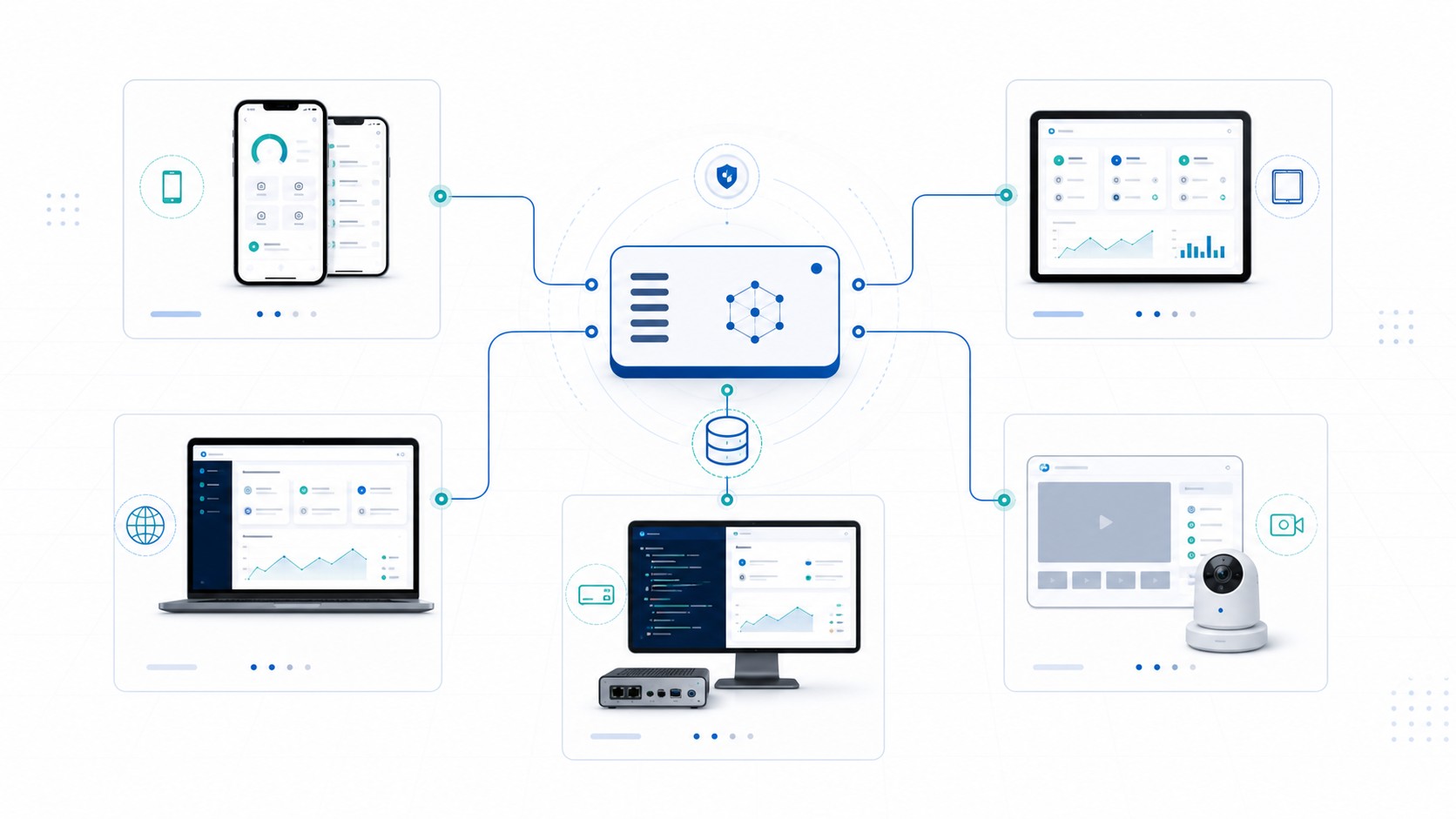
Realtek Connect+ sample ecosystem diagram with generic app clients, simulator, reference device, and central platform hub.

Highlights

What this service covers

  • iOS and Android SDK coverage for onboarding, control, and account flows
  • Android, iOS, WebApp, Linux Simulator, and PRO2 Device Demo reference samples
  • Push notification, release-readiness, and app publishing guidance

Capabilities

Platform building blocks

  • Shared mobile primitives for sign-in, provisioning, device control, and sharing
  • Reference app and device samples that validate SDK usage across app-side and device-side flows
  • Release planning for App Store and Google Play submission, rollout, and support operations

Outcomes

Why product teams use it

  • Shorten mobile and device integration validation
  • Keep app developers, firmware teams, and product owners aligned on sample boundaries
  • Avoid one-off app/cloud/device integration work for every product line

Sample Ecosystem

Reference sample applications across app and device surfaces

Each sample helps customers validate a specific Realtek Connect+ integration path while keeping production app ownership and formal cloud wire contracts separate.

Sample Side Validation focus Boundary
Android Home Automation sample App Provisioning adapter states, device list/detail, light and AC controls, camera monitor, and debug report. Native Kotlin reference; not an app-store deliverable.
iOS Home Automation sample App Swift SDK usage for setup profiles, device control, camera boundaries, and debug evidence. Native Swift reference; customer product teams own release UX and signing.
WebApp Ops Lab sample App Cloud-side onboarding, MQTT payload inspection, simulated controls, camera helpers, and debug report. Browser reference without BLE or SoftAP onboarding.
Linux Simulator Device Light, AC, and camera command handling without hardware, including local state and validation output. Simulator for evidence and development; not a production device firmware package.
PRO2 Device Demo Device Device-bound token, owner transport, snapshot upload, camera logs/events, and WebRTC Video over TURN answerer and ICE/TURN boundary. Firmware reference; concrete Realtek SDK calls stay firmware-owned.

SDK Foundations

Deliver branded mobile apps without rebuilding the connected product stack

The page now positions mobile SDK work as a reusable platform layer instead of a vague app-ready claim.

  • Cover shared onboarding, authentication, device control, and account-linking primitives through iOS and Android SDK layers instead of promising a full client framework in this repo.
  • Describe how mobile teams can map common device models, provisioning states, and control surfaces into product-specific app experiences with less custom cloud glue.
  • Keep the website explicit that the public Go application is describing app enablement scope rather than serving as the runtime for a native mobile client.

Reference Samples

Reference sample applications prove SDK usage before product integration

The sample ecosystem helps app developers, firmware teams, and product owners validate flows with concrete app-side and device-side references.

  • Use the rtk_cloud_client repository as the source of truth for sample code, specifications, and sample-specific README files; this website summarizes the customer evaluation path rather than hosting SDK source.
  • Use Android Home Automation, iOS Home Automation, and WebApp Ops Lab samples to validate provisioning, device list/detail, light and AC control, camera monitor, and debug report flows.
  • Use the Linux Simulator and PRO2 Device Demo to validate device-side command handling, sample MQTT payloads, snapshot upload, status/log/event reporting, and the WebRTC Video over TURN answerer and ICE/TURN boundary.
  • Treat these as SDK usage references, not production app-store apps or white-label release packages.

Notifications

Treat alerts and lifecycle messaging as part of the app product surface

Push and in-app notification flows are described as a coordinated mobile, cloud, and support capability.

  • Plan push notifications around onboarding completion, shared-device events, OTA prompts, alerts, and support workflows that need deep links back into the branded app.
  • Connect notification payloads to product authorization decisions, device ownership state, and customer support escalation paths so mobile UX stays consistent.
  • Show how product teams can align notification tone, branding, and preference controls with their own market and compliance requirements.

Publishing

Coordinate store launch work across engineering and product teams

Publishing guidance keeps the App SDK page tied to real launch execution instead of stopping at SDK selection.

  • Coordinate bundle identifiers, signing assets, store metadata, review checklists, and staged rollout plans for both the App Store and Google Play.
  • Use the page's contact path as a CTA for app developers and product teams who need to align branding, release readiness, and backend capability scope.
  • Keep store ownership, privacy disclosures, crash monitoring, and release approvals assigned to the product team instead of implying the website manages mobile operations.

Next step

Evaluate App SDK for your product roadmap.

Share your product category, target deployment, and cloud requirements with the Realtek Connect+ team.

Talk to sales